Explore ‘Time-Lapse Portrait’ in Aotearoa Poetry Yearbook 2025

Check out new poem “Time-Lapse Portrait” in the coming 2025 edition of “Aotearoa Poetry Yearbook”. Anthology book to be released and in bookshops from August!

Find Lee’s poems “Personal Pronoun in Greyscale” and “She is Being Not Enough” in “Tarot Poetry”, online journal, June Edition out now!

http://www.tarotpoetry.nz

Lee is keeping busy working towards a Masters in Creative Writing.

Self-Palinopsia 

(First published by Tarot Poetry, Dec 2024 Edition)

1 Light Streaking

In plastic envelopes floating kicking joy 

sun in eyes barbecuing skin already pink

taste of chlorine and the white noise roar 

of fun I am a star fish smiling unabridged

for the woman behind a mechanical eye

with my cousin posing giggling in

heart shaped glasses Marilyn and 

Madonna in mind later still in white linen

dress and court shoes leaning hands tilt 

with precision meaningful position of chin

eyes watch the lens seeing the eyes

first trip to Europe first digital snaps

together relaxed, fixed in place by great

monuments of history, memory, births, war

pregnancies and victories all store faithful 

in boxed wires until electric mayhem poof

outsourced digital mind melt metal smote

smell of plasticated smoke memento lost.

2 Visual Trailing

Now platforms gathered momentum

amass populations of memory investment

smart phones become sensory organs of

the internet, pictures of me store in a 

strange cloud more fungal than cumulus

roots grown in eccentric locations New 

Mexico deserts, factory basements hosts 

of hard drives pictures seed in digits one 

mouse click, spores electric race into outer 

space refract back to Earth’s gravity

pictures of me channel through fibrous

roots underground into a study where

a face appears on a screen – me

awkward at a dinner ocean view selfies

see the camera see it reflect in sunglasses

always see it look back even in sleep see 

filters and zoom angles in mechanised 

dreams pictures of me disappear in sheer

volume reduce to visual trail I am mere

molecules in a single cell of memory within

a vast shrooming digital hive of mind.

3 Illusory or Hallucinatory

After pictures of me in hospital databanks

maps geographic of moles, my ulcerated 

mouth, that rash, the lining of my gut 

each bump and fold each shade of red one 

hundred images imbed splices of spine

its awkward bend my brain in black and white

slides rendered all waiting to be read, each

temple layer casually perused by curious

file surf glance through my insides all of my 

secret places once sacred soon dated

scored and recorded.

4 After-imagery

Pictures of me, too many to count

they float in envelopes, posed fixed 

by monuments some lost, some stored 

random images collect on platforms

dispersal in electronic fungal blooms 

finally, pictures of me, my interior bodily 

treasons kept locked by government agency, 

an account of self saved for perpetuity.

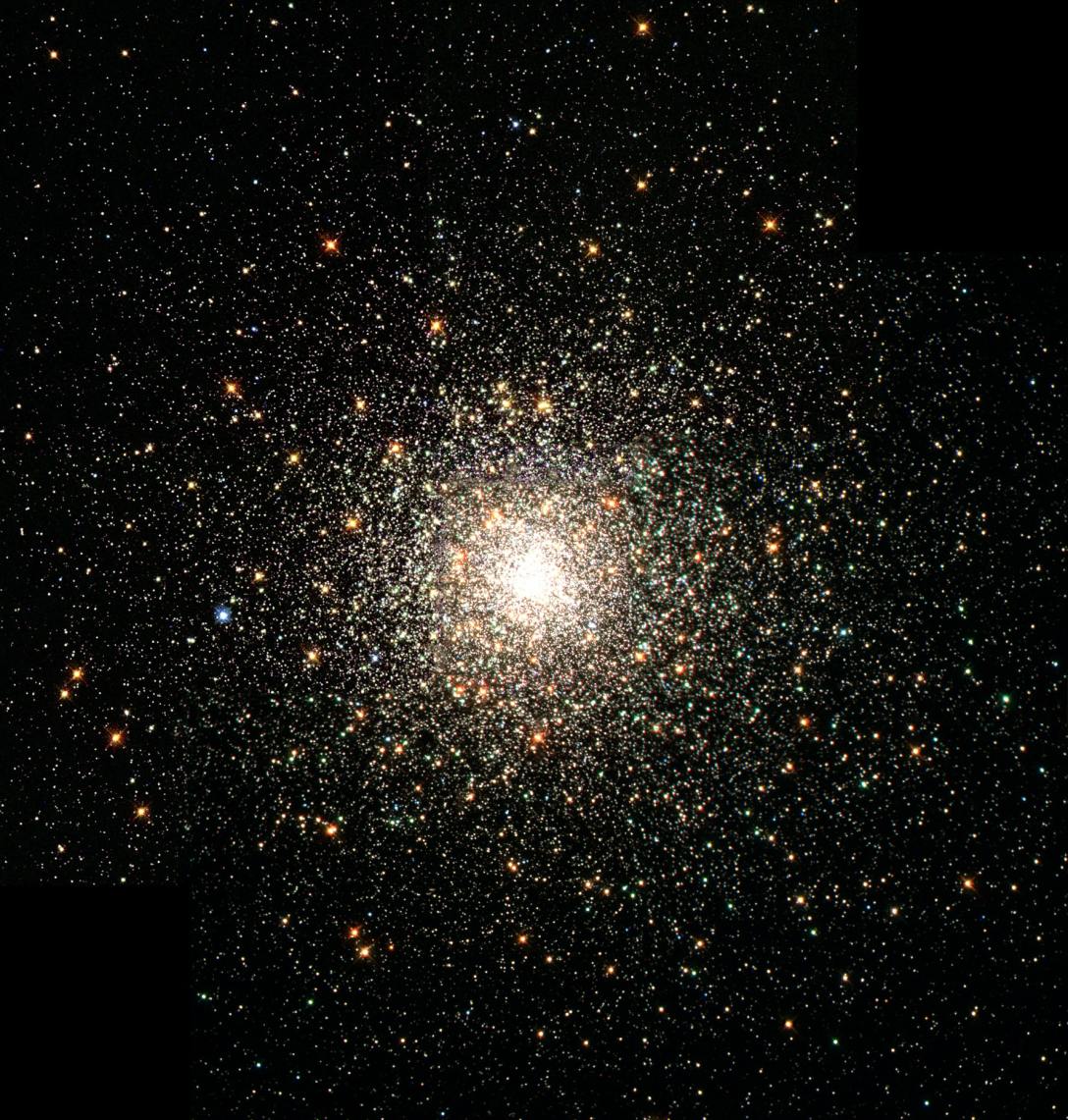
Photo by traf on Unsplash
We are the Dead

Inspired by reclusion, a year’s headlines, and the song by David Bowie.

We are the Sad Ones, silent we hold

to stones of privilege in each hand by

the cold of unreclaimable duties, we stand

human, our heroes all dead, arms too full

guts too frail to man controls.

The sad ones see unfolding power

ripe everywhere in everyone but not

in us, in us just articles of anger

lodge in throats, tired voices wait

for only Hope is worth negotiation.

We the seeing unseen, by sun unkissed

when we go to them our heroes will all

look back at us cool from the coal abyss

say inequities lisp our hubris, us Sated

Ones spill godless prayers as we fall,

our respects unsaid, We are the Dead.

*

Original poem by Lee Jane Taylor

Photo credit; Reign-Abarintos for Unsplash

Principles of Journalling

“It Winds” A lifetime is a long, long curl     of quiet moments     interrupted by noise though I searched to find     I never met a straight line     in all my life     all observed     it curves     it coils     winds through time only the stuff of minds     mathematics   logic   humankind’s intent to order all     straighten     make predictable categorical     all phenomena universal     proves so     beautifully unruly     it is poetry in the end will always defy     our black and white divides     and in full colour mystify.

In my opinion, informed by cognitive-behavioural and mindfulness therapy practices, when journalling for self-care it is useful to keep in mind the following simple principles: Honesty, openness, kindness and balance. In today’s post I will discuss these briefly along with the use of reflective habit. 

Honesty

Journalling is an opportunity to be completely honest. Your journal is one listener who will never judge you – guaranteed! Writing with honesty can be harder than it sounds. We are practiced at writing to convince, to impress or to seek a grade. Stripping these habits back to simple honesty can take some practice.

Take a moment recalling your thoughts and emotions today. There is no correct way to think or feel. Though sometimes others, or an “inner voice” may try to say there is. Honest entries are useful entries. If what you’ve written doesn’t quite ring true – that is interesting. Ask yourself, what is that about? Am I trying to be clever? Am I trying to avoid some feeling /idea? How come? You can then add or change a little detail if you like. I suggest not to re-write entries in general though. Whatever came out is ok (be kind!). Journalling is a “whole-book process”.

Openness

Being open means viewing each entry as an exploration. It is more helpful to start writing with “lets see where this goes” rather than “this had better help” or “I should write about X, Y, and Z”. Be open to new writing activities /approaches. Be open to mistakes. Mistakes lead to creativity. Going “off plan” is going somewhere new – it may lead to a dead end, but occasionally will lead somewhere wonderful. Be open to inspiration. What was the last thing that lit you up inside? Look for the little moments that sparked joy or intrigue. A new leaf on a pot plant, a moody streak of cloud, a delicious pastry, a painting or a song. If it moved you, then it is worth writing about.

Kindness

The essence of self-care is treating yourself with kindness. It may be helpful to set goals around length /frequency of entries. However, be flexible. Holding yourself to a rigid routine may be unkind and then the purpose is lost. Perfectionism is enemy numero uno of self-kindness. Perfectionism generates self-criticism.

When you have self-critical thoughts about your writing – pause and really take notice of what you are thinking. On inspection you may notice these thoughts are out of proportion, unreasonable, or unrealistic. Tell yourself gently that these thoughts are unhelpful and let them go. When you notice self-criticism within your writing, this may be an honest summation of where your mind has been through the day. It is helpful to have written this out where you can reflect on this intentionally. Again, try to respond kindly.

After some reflection, you might like to add a kind thought or two to finish your entry. For example, “Well, that didn’t work but I gave it a good try and I’m doing well at persevering at this, under the circumstances”. Helpful kind thoughts are realistic and believable (rather than overly positive).

Balance

You may choose to journal mainly gratitude, or as emotional venting, or as a record of symptoms, some other purpose or a combination. Whatever you main focus, if a goal is self-care and supporting wellness then it is best to aim for balance. Venting and symptom recording can be very helpful. However, a journal that is full only of symptoms, upsetting thoughts and challenging emotional experience is going to focus your attention on difficulty and may keep you stuck in negativity. Conversely, filling a journal with only gratitude and optimism may mean you are ignoring important daily experience.

Unacknowledged feelings have a way of haunting us, and denial can be harmful. This undermines the good work of journalling. We are unlikely to really believe the positivity and gratitude we are writing if we are not-so-secretly harbouring anxiety, frustrations, and grief just under the surface. It is best to aim for balance.

If you are focussing on gratitude – great, but consider starting each entry with a line or two about challenges of that day /week and how that feels. If you are focussing on venting – also great, but consider ending each entry with a line or two about something you are grateful for.

Reflection 

You may have noted discussion of each principle references reflecting. Practicing reflection in your writing is a cornerstone of self-care. This can be developed by setting a habit at each entry. Before you start writing, take a couple of minutes reflecting back on your day /week.

How have you been feeling, emotionally and physically? What thoughts have been popping up or repeating? How have you been sleeping and dreaming? What have you been enjoying most? What has surprised you lately? As you finish your entry, read back on what you wrote. Consider the principles above. Does it sound honest, open, kind, balanced? If not, take an interest, be curious – what’s up with that? What’s in the way?

You may then want to address it immediately by adding to your entry. Sometimes it’s better to plan to explore the concern in a next entry. Or, more often, just thinking about it is useful. Learn and move on. 

Distressing Thoughts: Sometimes distressing thoughts come through in journalling. When this happens it is best to discuss these with someone you trust. If this doesn’t settle your distress, then you should see your GP or family doctor to talk about possible supports. In the meantime, take more time for caring for yourself – keep a regular routine for eating, sleeping, exercising, do more resting, pleasant activities, relaxation and spend more time with supportive family /friends.

Your journal is for you and only you. It is a “whole-book process” and every entry is a record of a small piece of a long journey. There are bumps and twists and turns along the way. Often, the best bits in a trip are the strange, unexpected diversions!

There will be more journalling tips and discussion to come. Next “Staircase” post will be a small diversion. I will present a fun and interesting writing activity.

Take care x

Photo is by Mike Tinnion, from Unsplash.com

Creative Electro-Magnetics

This week’s poem is something a little different. I’m not feeling so well so I’m posting from my “back catalogue”. This is a sample of reasoning from deep down in the depths of inflammation. Was I meditating on some truth? Was I high on Prednisone and pain killers? I will let you decide… Hopefully, someone finds it interesting! Next self-care post will be Principles of Journalling – Take care x

Photo by Michał Mancewicz on Unsplash

Creative Electrics

The words unstick

sadness come undone

to a numbing succumb

unmoving heart.

Sweet trickle 

twist missed

bidding unrest this

Arctic Pole

demagnified in chest. 

Hunts for fastness

thoughts sharp bladed

memory’s arrows

– set to heart’s churn

electrifies creation.

A sadness intent

cleansed and wrung

a well without 

      and within

  re-sprung.

Strangest alchemy 

of creativity –

 electric motion 

     tuned through lonely

  magnetic heart 

  imaginal energies

sparked,

satisfaction come.

Sky House Manifesto

Poetry and Calm

Poetry is (and should be!) so many things – abstract art, sociopolitical critique, a voice of the marginalised, humour, satire, a call to arms. A gem to wear under your skin. A vessel for dreams and dark magics.

My aim is to publish some of my poems here that support reflective thinking and calm. I will also be posting some reading recommendations, as well as relevant self-care tips*. In particular, around the use of mindful reading and writing to promote calm and wellness “steps to the front door of your own sky-house”.

Like any writer my poems will walk where they are want to go. Many germinate in the dark corners and dusty margins of life, in tunnels underground. I nurture them towards the light – because we all need more hope in our lives. Of course, hope is not pretending everything is well. Hope is staring head-on into the centre of darkness, finding a faint star, and holding focus on that promise of light.

while illness contains me, poetry sustains me

Poetry can be used effectively as a stimulus for a more mindful approach in our thinking and communicating. This is more than a psychological band-aid. This is a kind of replenishing self-care we all require in some form, in order to persevere with whatever battles we join – environmental, satirical or otherwise.

Reading recommendations and other feedback are warmly welcomed.

* These are informed by my psychology training and years of clinical experience as a therapist, as well as by my own experience of chronic illness.