She Is

I love the family rituals and togetherness of the holidays. However, it can also be a time when we feel absence most keenly. Sometimes the hardest time is once others return to work and school and we struggle with finding a “new normal”. If you are living with grief right now, I wish you peace and comfort. I wrote this poem for a family member, and myself, during a period of loss.

Tribute (For Poppa)

I don’t know what you believe about lives and the long

long after, when our moment is done we join the ones

we lost perhaps in some next place or become part

of the “everything-in-one”. 

Wherever minds go – somewhere, nowhere – 

we leave behind bones and neurones, and the sadness

of cellular silence. No more busy replicating the pattern

in them unique to her, slowly unravelling.

A sacred code repeated in the gesture of a sister’s hand 

in the twinkling of a brother’s eye a pattern memorised

safely held in your heart as you go on. I don’t know 

if there is memory in a soul but the atomic travels of us 

we can imagine. Parts of her rejoin the earth a joyous 

homecoming to quench the thirst of trees that feed 

the Tui, the Chamois and the Tahr.

Where is she now? Particles of her rise to fill clouds

elements of her penetrate the gates of atmospheres 

populate other worlds, warm under other suns, 

older and newer to be spun through black holes 

matter collapsing and exploding again, again 

as radiant supernovas burning bright in the night 

skies of a thousand galaxies.

Perhaps the quarks of her small enough slip

through weaves in fabrics of time and parts 

of her play in past, present, future all at once

and she is already in the buds, the sepals and hips 

of generous perfumed blooms of summer and their 

fountains of colour she is in the velvet garden faces 

of the cool months in their yellow violet petals five 

she is alive as the Sunny Boy and the Moon Moth

Where is she now my lost love? we ask, the tensions 

of bodily form come undone, parts of her in the leaves 

and the snow, echoes in the deeds of those who hold 

her close as she joins with her own elders, ancestors, 

molecules unpinned from boundaries of time – she is 

in every moment all at once.

Hold your hand open to the air

feel the aliveness, she dances there

she is the trees she is the rain she is the stars

she is

and she is safe –

in the repeating patterns, of our saddened hearts.

June News

Lee has a few new poems published in this season’s Tarot magazine (June, 2023). Tarot is Aotearoa’s poetry only literary journal, advertising free and free to view online, it is a beautiful venture to be part of and to support. You can read this issue at tarotpoetry.nz

10 Ways Poetry Supports Wellness

Feeling blue? Aches and pains got the better of you? Pick up a pen or chapbook – poetry has your back!

It’s been a stormy time up at the Sky House. Once again, poetry has saved my life (the love and care of family and a strained but persevering public health system were also essential ingredients)! I’ve been thinking about all the ways writing and consuming poetry can support wellness. Here is my top 10 list…

  1. Reading poetry can teach you to listen closely and hear subtleties of expression. Reading can teach you to write with more intuition and intent.
  2. Writing poetry is a way of feeling truely heard. No one knows me like my poetry journals! Writing makes you a more perceptive reader.
  3. Poetry is a way of connecting with nature, the past, people different from you, people with shared experiences.
  4. Meaning in poetry is conveyed in a plurality of form, image, metaphor, sound. This can be cathartic, allowing you to vent, unload and express ideas and feelings that are difficult to articulate.
  5. Observe how you respond to pieces of writing and poetry can help you build self-awareness.
  6. Poetry can increase your vocabulary. I love it when I need a dictionary or thesaurus to help me! This enhances your understanding or articulation of whatever is important to you.
  7. Poetry with its unexpected syntax might enhance or preserve your mental flexibility. Like crosswords or sodoku – but way more entertaining!
  8. Poetry requires mindful (fully concentrated) reading and helps you let go of everything but this moment right now.
  9. Poetry is the native language of history, challenge, deconstruction, emotion, beauty and invention.
  10. They say in the ancient times after battle, the victorious spared the poets so they would tell the tale of their glory. So, in an apocalyptic war, poetry might literally save your life!

WARNING Any effective treatment has side effects. Treating a busy lifestyle with poetry may result in an overuse syndrome. Symptoms may include: Compulsive consumption i.e. it is difficult to stop reading /writing, blurry vision, thinking in a “poetic voice”, rhyming your grocery list, paper cuts. If you are experiencing these, Sky House recommends a nice cup of tea and a nap. Consult a librarian if symptoms persist.

Take care everyone,

Lee x

NZ Xmas in Pohutukawa, Rata, Banksia Bottlebrush

Sky House is overdue for a “Staircase” (self-care) post. However, Lee is on an unscheduled “wellness hiatus”. In the meantime, here is some poetry prettiness from the sick bed… 

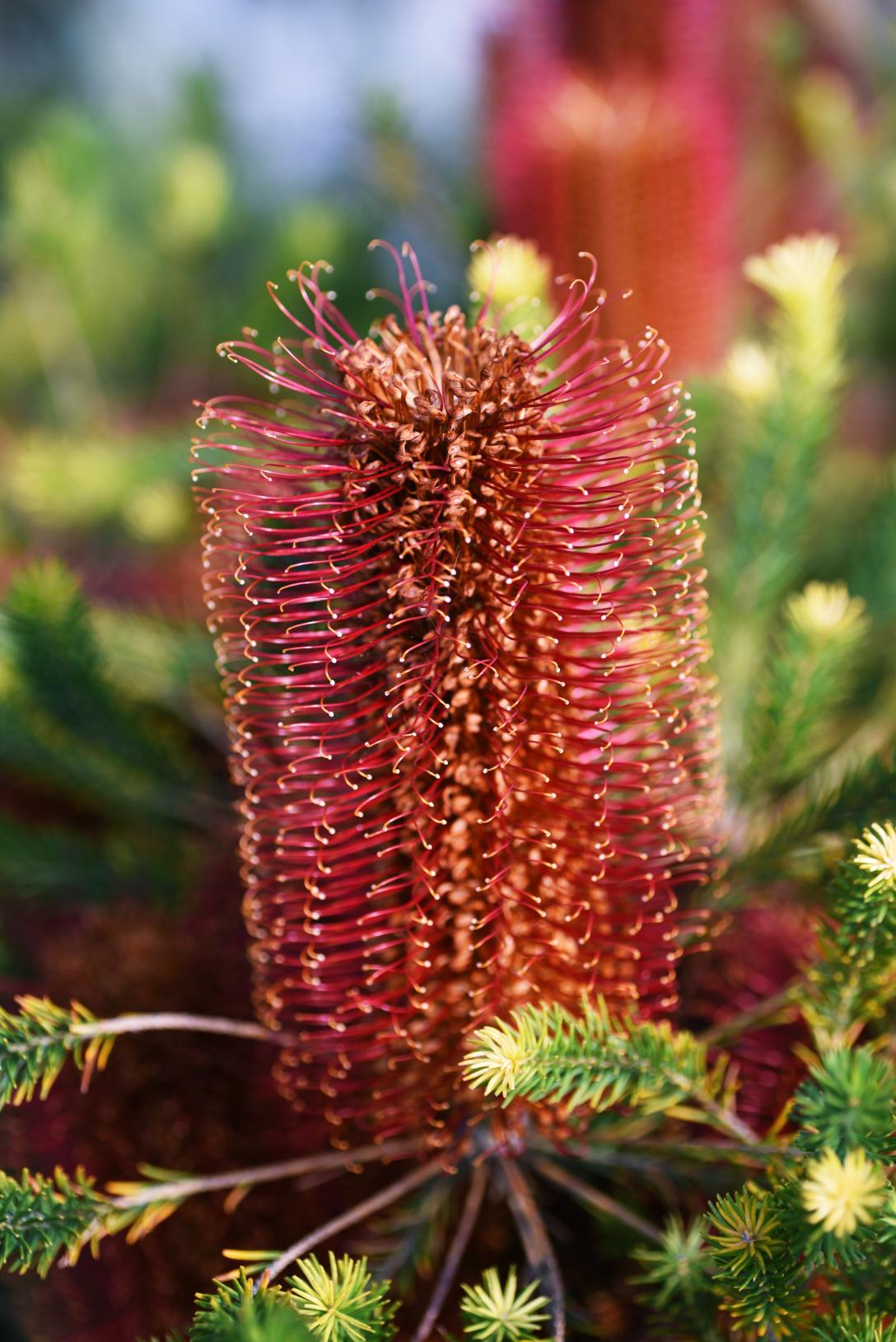
Your exotic horticultural brush sweeps

full my palm with feel of cats paw in

retracted claw or, sleeping arctic shrew

your petal needles like haberdashery wound tight

threads unspool to bloom, already sunseed ended

before you fire a rocket in still life you are

true scarlet make roses weep at your pebbled feet

you brighter than blood brighter than tulips

on dark leaf you can embezzle Christmas

you are ecstasy indulgence colour effulgence

of gnarly old tree, arrive to me in

young hands greedy for, generous with beauty

your botanical incarnations of buddhist

lama’s bodies of joy, undulating tassels 

celebrate abundance, the one amongst 

many, all your neat little bundles in rows

progeny tucked in ruby oriental hair bows

food for inspiration whisper poems: paint

compositions in each cough of wind breath

embroidered flower fluffs branches

all for nourishment and pleasure of our bell

spoken, silver watching ones velvet tongues

hungry in cooler months for foreign feasts

all to free your tiny yellow seeds

to voyage possibilities, live circularities

Pohutukawa, Rata and the only Aussie I

ever truely loved is Banksia, honeysuckle

christmas blooms as red bottle-brush.

Thank you to the beautiful Anouk for administrating this post.

Meri Kirihimete, happy holidays, and a soulful solstice to all.

Photo by Don Ricardo on Unsplash

Sky Phenomena

Cloud, storms, rain, hail flurries and 

forks of lightning, star blaze and a waning

moon, comet flare and meteor streak, eclipses

occasional rainbow miracles

poetry resides in skies in vividity of light wild

rides backs of water drops sculpting 

stratus scapes colour draped by sunrise

flows through eyes mild 

and murkied, quiet mind, busy finger tips

dip grace in words lightly ink brink 

of endless expansiveness, sense 

records in finite edits this 

evanescence of wilderness and minds

poetry is not mine, poetry resides in skies.

Geographies of Imagination and Memory

Minds live wide lives from the ways 

of wild waters to slow mountains lumber 

unimpeded, North and South grow 

with each shock rumbling kick Papa’s 

final progeny reaches out to arms of sky 

stretching prominence into dominance

alps are spines of memory lumbar peaks

instinctive, ancestral, personal, habitual

volcanic rock of memory, all masterful

ever clumping to higher ranges craggy 

scar marks of time loom taller with years

yet an ocean always surrounds in vastness 

blues deeply scattered with eyes of cuttlefish 

distant whales kiss breaching fountainous

under touch of sun and melting stars that 

ripple drip reform in salty breaths I can run

eyes along the sky skim an alpine spine and I 

can turn back anytime to the coastline

dip feet in the cool fresh of sea its endless 

possibilities, where dream creatures bloom 

luminescent – the sea, is moved by tides 

under watchful glow of weeping satellite 

but in the deep, ocean currents flow free.

Photo by Amy Humphries on Unsplash

Principles of Journalling

“It Winds” A lifetime is a long, long curl     of quiet moments     interrupted by noise though I searched to find     I never met a straight line     in all my life     all observed     it curves     it coils     winds through time only the stuff of minds     mathematics   logic   humankind’s intent to order all     straighten     make predictable categorical     all phenomena universal     proves so     beautifully unruly     it is poetry in the end will always defy     our black and white divides     and in full colour mystify.

In my opinion, informed by cognitive-behavioural and mindfulness therapy practices, when journalling for self-care it is useful to keep in mind the following simple principles: Honesty, openness, kindness and balance. In today’s post I will discuss these briefly along with the use of reflective habit. 

Honesty

Journalling is an opportunity to be completely honest. Your journal is one listener who will never judge you – guaranteed! Writing with honesty can be harder than it sounds. We are practiced at writing to convince, to impress or to seek a grade. Stripping these habits back to simple honesty can take some practice.

Take a moment recalling your thoughts and emotions today. There is no correct way to think or feel. Though sometimes others, or an “inner voice” may try to say there is. Honest entries are useful entries. If what you’ve written doesn’t quite ring true – that is interesting. Ask yourself, what is that about? Am I trying to be clever? Am I trying to avoid some feeling /idea? How come? You can then add or change a little detail if you like. I suggest not to re-write entries in general though. Whatever came out is ok (be kind!). Journalling is a “whole-book process”.

Openness

Being open means viewing each entry as an exploration. It is more helpful to start writing with “lets see where this goes” rather than “this had better help” or “I should write about X, Y, and Z”. Be open to new writing activities /approaches. Be open to mistakes. Mistakes lead to creativity. Going “off plan” is going somewhere new – it may lead to a dead end, but occasionally will lead somewhere wonderful. Be open to inspiration. What was the last thing that lit you up inside? Look for the little moments that sparked joy or intrigue. A new leaf on a pot plant, a moody streak of cloud, a delicious pastry, a painting or a song. If it moved you, then it is worth writing about.

Kindness

The essence of self-care is treating yourself with kindness. It may be helpful to set goals around length /frequency of entries. However, be flexible. Holding yourself to a rigid routine may be unkind and then the purpose is lost. Perfectionism is enemy numero uno of self-kindness. Perfectionism generates self-criticism.

When you have self-critical thoughts about your writing – pause and really take notice of what you are thinking. On inspection you may notice these thoughts are out of proportion, unreasonable, or unrealistic. Tell yourself gently that these thoughts are unhelpful and let them go. When you notice self-criticism within your writing, this may be an honest summation of where your mind has been through the day. It is helpful to have written this out where you can reflect on this intentionally. Again, try to respond kindly.

After some reflection, you might like to add a kind thought or two to finish your entry. For example, “Well, that didn’t work but I gave it a good try and I’m doing well at persevering at this, under the circumstances”. Helpful kind thoughts are realistic and believable (rather than overly positive).

Balance

You may choose to journal mainly gratitude, or as emotional venting, or as a record of symptoms, some other purpose or a combination. Whatever you main focus, if a goal is self-care and supporting wellness then it is best to aim for balance. Venting and symptom recording can be very helpful. However, a journal that is full only of symptoms, upsetting thoughts and challenging emotional experience is going to focus your attention on difficulty and may keep you stuck in negativity. Conversely, filling a journal with only gratitude and optimism may mean you are ignoring important daily experience.

Unacknowledged feelings have a way of haunting us, and denial can be harmful. This undermines the good work of journalling. We are unlikely to really believe the positivity and gratitude we are writing if we are not-so-secretly harbouring anxiety, frustrations, and grief just under the surface. It is best to aim for balance.

If you are focussing on gratitude – great, but consider starting each entry with a line or two about challenges of that day /week and how that feels. If you are focussing on venting – also great, but consider ending each entry with a line or two about something you are grateful for.

Reflection 

You may have noted discussion of each principle references reflecting. Practicing reflection in your writing is a cornerstone of self-care. This can be developed by setting a habit at each entry. Before you start writing, take a couple of minutes reflecting back on your day /week.

How have you been feeling, emotionally and physically? What thoughts have been popping up or repeating? How have you been sleeping and dreaming? What have you been enjoying most? What has surprised you lately? As you finish your entry, read back on what you wrote. Consider the principles above. Does it sound honest, open, kind, balanced? If not, take an interest, be curious – what’s up with that? What’s in the way?

You may then want to address it immediately by adding to your entry. Sometimes it’s better to plan to explore the concern in a next entry. Or, more often, just thinking about it is useful. Learn and move on. 

Distressing Thoughts: Sometimes distressing thoughts come through in journalling. When this happens it is best to discuss these with someone you trust. If this doesn’t settle your distress, then you should see your GP or family doctor to talk about possible supports. In the meantime, take more time for caring for yourself – keep a regular routine for eating, sleeping, exercising, do more resting, pleasant activities, relaxation and spend more time with supportive family /friends.

Your journal is for you and only you. It is a “whole-book process” and every entry is a record of a small piece of a long journey. There are bumps and twists and turns along the way. Often, the best bits in a trip are the strange, unexpected diversions!

There will be more journalling tips and discussion to come. Next “Staircase” post will be a small diversion. I will present a fun and interesting writing activity.

Take care x

Photo is by Mike Tinnion, from Unsplash.com

Creative Electro-Magnetics

This week’s poem is something a little different. I’m not feeling so well so I’m posting from my “back catalogue”. This is a sample of reasoning from deep down in the depths of inflammation. Was I meditating on some truth? Was I high on Prednisone and pain killers? I will let you decide… Hopefully, someone finds it interesting! Next self-care post will be Principles of Journalling – Take care x

Photo by Michał Mancewicz on Unsplash

Creative Electrics

The words unstick

sadness come undone

to a numbing succumb

unmoving heart.

Sweet trickle 

twist missed

bidding unrest this

Arctic Pole

demagnified in chest. 

Hunts for fastness

thoughts sharp bladed

memory’s arrows

– set to heart’s churn

electrifies creation.

A sadness intent

cleansed and wrung

a well without 

      and within

  re-sprung.

Strangest alchemy 

of creativity –

 electric motion 

     tuned through lonely

  magnetic heart 

  imaginal energies

sparked,

satisfaction come.

Journalling for Self-Care

Getting Started, Tools, Dear Journal, Perfectionism

Tools /Equipment

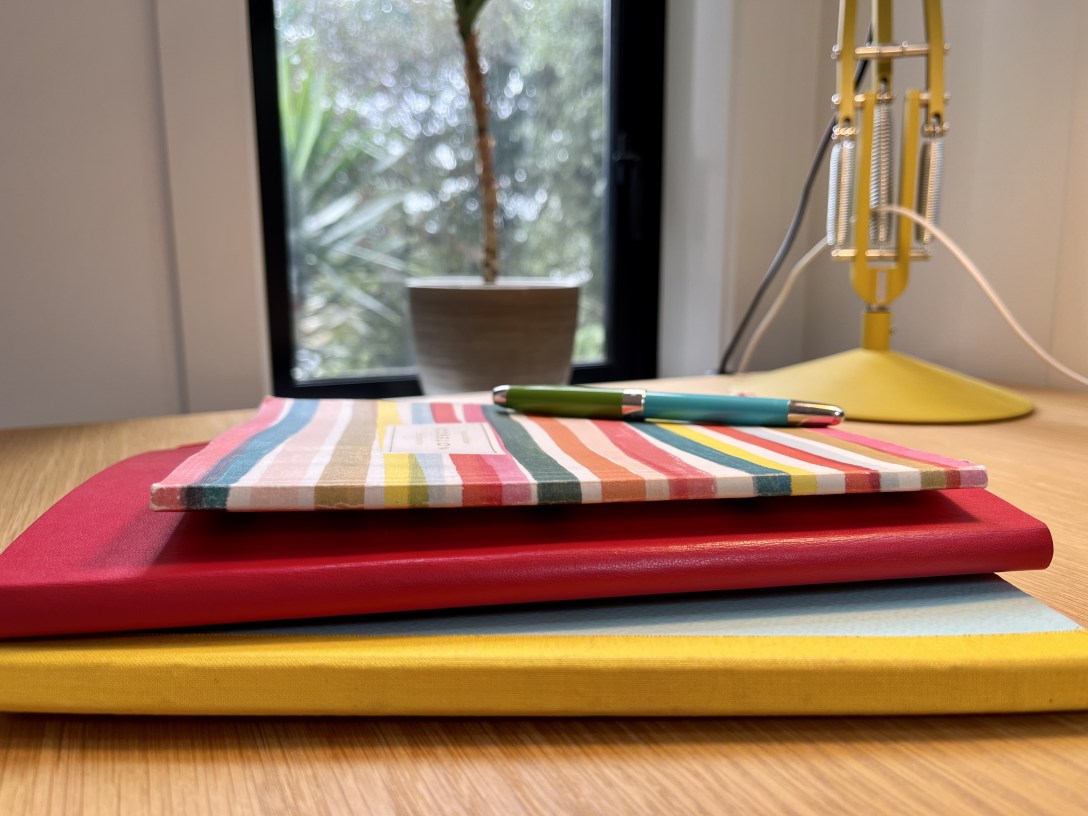
One of the best things about journalling is you don’t need a bunch of special equipment. Just your mind, pen and paper.

Screen Vs Paper: 

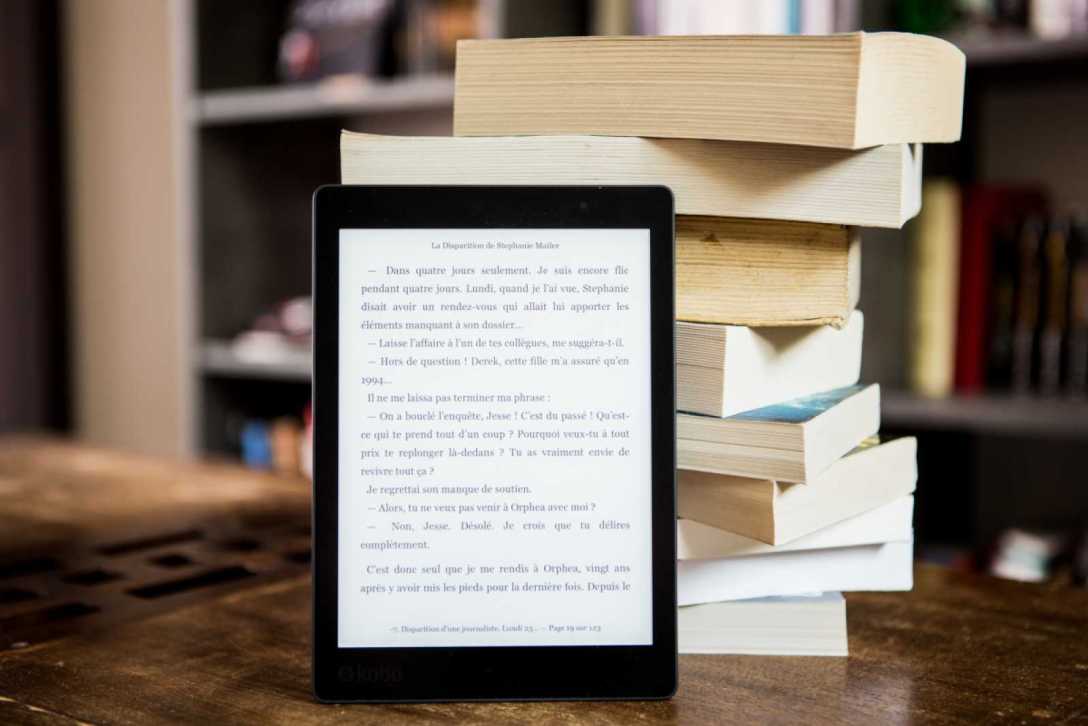
You can use a device and electronic format as a journal. This may be convenient in some cases such as keeping daily records of symptoms. However, when using journalling for self-care, good old fashioned paper is best. 

The negative impact of screen use on tension, stress and the sleep-wake cycle is well documented. Typing has been shown to be a more automatised task than handwriting. – The slower speed and intentional physicality of handwriting enhance mindfulness. This implies being fully present in the task, and likely then feeling more relaxed, alert or grounded. 

Another benefit of handwritten journals is that nothing is fully erased. Looking back in journals I often find what I crossed out is as much an insight as what I kept. 

Typing may be most efficient for result focussed writing, while handwriting is better for process focussed writing*. 

In journalling for your self-care, the point is benefitting from the process of writing.  

Journal Selection: 

You can use anything really! Stapling together some refill or printer paper can make a journal. At the other end of the spectrum are date-diary style “mindfulness journals” or “gratitude journals” with glossy covers and lots of boxes to fill. This may suit someone feeling intimidated by an empty notebook. These are useful if you want a diary record mainly for mood management (many have mood relevant “boxes” i.e. eating, sleeping, difficult thoughts etc). 

Pre-formatted journals do not allow much room for creativity. It can be difficult to find a good match for the categories of experience you most want to record. They do not allow for changes in need over time.

My preference is for a plain covered A5 size lined notebook with a flexible spine. 

This keeps things tidy enough for re-reading, is a portable weight , and is comfortable for writing in bed, the sofa etc. My eye used to be turned by a pretty cover. However, I found the prettier the cover, the higher my expectations of writing, and the less I wrote. Plain can be classy (and low pressure!).

*An exception is if you have dyspraxia or dyslexia, then typing your journal may be more effective and calming. Best to test this out.

Dear Journal

I like to start each journal with a note to my new bestie. I tend to summarise “where I’m at” to give the journal a context if I read it later. It can be helpful to compare these over time, to see how things have progressed. Sometimes we underestimate growth because travel towards life goals can be so slow. Comparing starting point journal entries can give perspective. Sometimes this highlights how much something has improved. Sometimes it highlights something stuck that requires more work or attention.

I also use this entry to set some intentions for the journal. For example, “I am going to try to fill you up with drafts for poems and mindfulness experiments”, “I am going to vent my big difficult feelings and thoughts and keep a list of what I’m grateful for” etc.

What is the purpose of your journal? How will you use it? What might that look like? How often will you make an entry? It’s helpful to write this down in the first pages.

It is best to keep your intentions flexible. Journalling is always a creative undertaking and it will evolve. Journalling for self-care requires an attitude of kindness to yourself. This entails gentle, flexible intentions re quality and frequency of entries.

Perfectionism

Perfectionism is a common obstacle to getting started. I have experienced myself the fear of the beautiful blank page! Often I have started a journal full of optimism only to toss it aside in disappointment when I make a “mess” in the opening pages. Later I am crossing and scribbling and can’t remember what the neat fuss was ever about. 

Here are some strategies for overcoming perfectionism if it gets in the way of enjoying journalling:

– Remind yourself gently, the point is the process not the outcome i.e. “this is an exercise in letting go”, “this is just for me”, “this is not a test”.

– Remind yourself “creativity often starts with a mistake”, “learning requires mistakes”. If we do something “perfectly”, then we are not learning. 

– Set an intention, “Dear journal, I will fill you with ideas and experiences. This won’t always be neat or tidy. Just as life is not neat or tidy!”. Something to this effect is useful to include in your Dear Journal.

– Try starting your journal with an intentional mistake /mess i.e. writing “life is not perfec” on the front page, draw a scribble or doodle, rip the page a little, rub on some dirt!

Start by giving yourself permission to let go of neatness and correctness. Journals are for exploring and experimenting. They are well loved when they are filling with thought, feelings, imagination and mess. Honest, they love it! 

Go on, fulfil your journal’s life purpose – enjoy it, fill it up, and let it get messy!

Take care x